October is Menopause month, with World Menopause Day falling on the 18th. For some, Menopause might arrive gently without much disruption, however for many it can come with a swathe of symptoms and even have a life-changing impact. At MoreYoga we are proud to support people with the practice of Yoga through all life’s ages and stages. Still largely stigmatised in society, we want to not only shine a light on the topic of Menopause, but to help champion this time of inevitable change and transformation for many women.
Menopause gets a bad rap in our society and the UK media in particular, with phrases such as ‘ill‑health’, ‘psychological disturbance’ and ‘disease management’ dominating the headlines. It can be easy to assume therefore, that the only solution lies in expensive remedies designed to tap into our fears. Whilst women’s symptoms vary in intensity, and yoga won’t be able to cure all, the practice can be a vital support during this significant time of change.
There is a long way to go with hormonal health funding and attention on women’s health in general (don’t even get us started on how much societal value is placed on a woman’s child-bearing years). Thankfully, awareness on the subject is growing thanks to open conversations and celebrity voices (thank-you, Davina McCall & Penny Lancaster!).
Initiatives like “Menopause Awareness Month” seek to reduce stigma and taboos around this topic. Gone are the days where peri-menopause and menopause were something to be quietly endured, with more focus now being placed on identifying early the key symptoms and what we can do about them.
Yoga offers ways to address some of the key symptoms that impact women at this time: Sleep disturbances, joint stiffness and anxiety to name a few. Below are some tools we hope you find useful in your Menopause journey.
😴For better sleep:

Yoga for menopause: Nidra: 1-2 hours before bed time
With many reporting sleep disturbances during Perimenopause and Menopause, Yoga Nidra, often scientifically referred to as ‘non-sleep deep rest’ can be a brilliant aid to help you catch more shut-eye. A blend of Yogic sleep and meditation, the practice guides you into a focussed yet relaxed state, before moving through awareness of the body, breath, emotions, and visualisations. After just a single Yoga Nidra session, practitioners have been shown to have increased melatonin levels (the hormone we need at night to help the body sleep). If practised regularly, Yoga Nidra can help restore the body’s natural circadian rhythm.
😥For anxiety, joint stiffness & emotional imbalances:

Yoga for menopause: A restorative practise
Many report emotional changes during Perimenopause, whether that be heightened anxiety, mood swings or depressive episodes. Whilst Yoga can’t claim to be a ‘cure all’, it has been shown to lower Cortisol levels [the stress hormone] whilst easing out tired muscles and joints. With stress known to exacerbate symptoms further, adding Yoga to your routine could be just what you need to access a moment of calm. Everybody will have their preferred style, and it’s important to be mindful and kind towards your body.
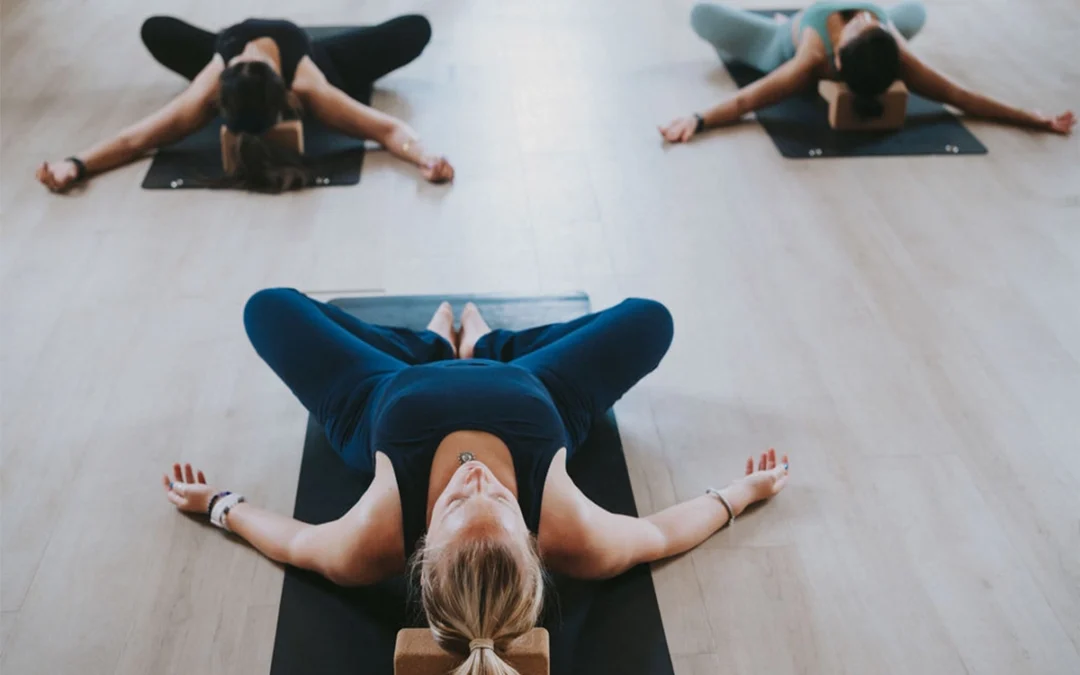
Try something gentle and nurturing such as an hour of Restorative Yoga. If practising at home, make sure you’re supported by props such as blocks, an eye pillow and bolster, to help aid deep relaxation. Reclining on a Bolster (Supta Baddha Konasana) is one of our favourites, and a wonderful way to feel gently stretched, supported and held. You could also add thoughtful extras to your space such as your favourite essential oil aroma or soundtrack,to enhance the overall experience.
🧠For brain fog, memory & concentration:

Yoga for menopause: A breathing technique for focus: 3-5 minutes each day
If you’ve forgotten where you put your car keys or can’t quite recall a song title on the tip of your tongue, you’re not alone. According to a 2024 study, 70% of menopausal women complain of brain fog, and over 50% said they had some form of memory loss.
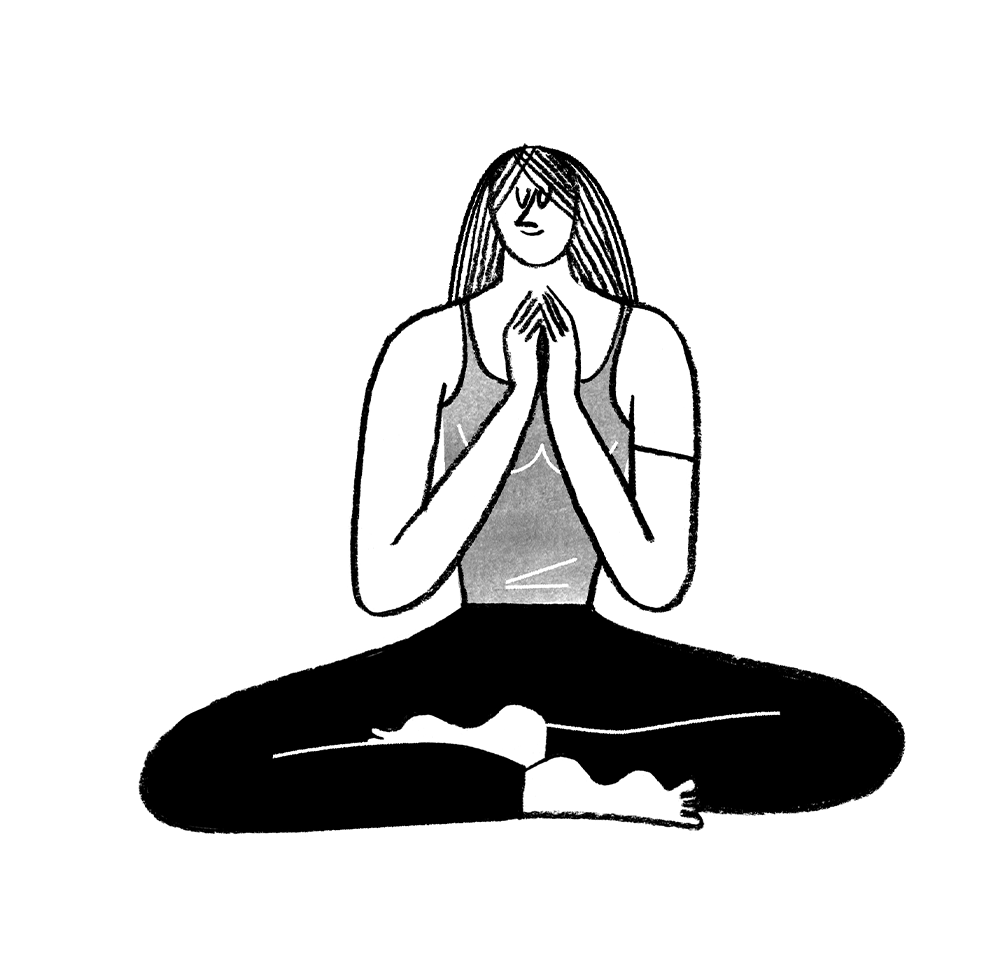
Yoga offers powerful tools to help enhance memory and focus, and any form of movement or mindfulness will no doubt serve to hone your focus away from chaos and distraction. Nadi Shodhana Pranayama (alternate nostril breathing) is a fantastic tool for enhancing focus mental clarity and emotional balance.
How to Do It: prep
- Sit cross-legged on the floor, on a cushion, or in a chair with your spine upright.
- Rest your left hand on your knee
- Use your right thumb to close the right nostril.
- Use your right ring finger to close the left nostril.
- The index and middle fingers can rest gently on your forehead or fold into your palm.
How to Do It: technique
- Close your right nostril with your thumb and inhale slowly and gently through your left nostril
- Close the left nostril with your ring finger, pen the right nostril and exhale slowly through the right
- Inhale through the right nostril (same nostril you just exhaled from), close the right nostril, open the left, and exhale through the left.
Unroll Your Mat, Unwind Your Mind
Ease back into Yoga without pressure. Try your first month for £1, then half price for life. The calm is calling.