
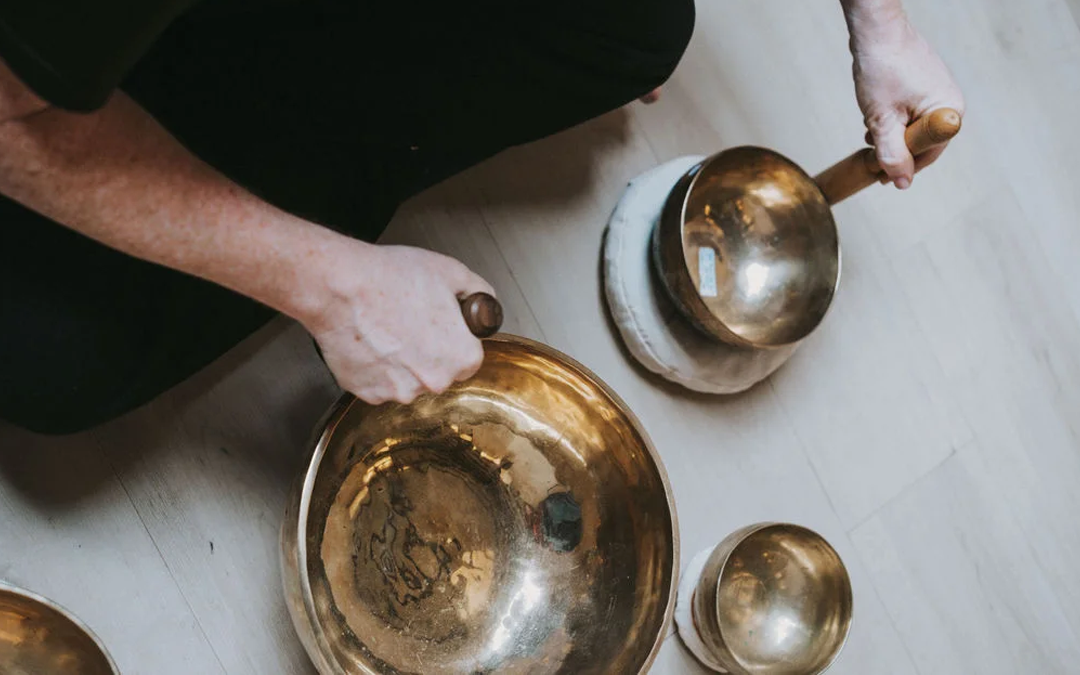
There’s a studio in East London that sadly closed its doors recently. It holds a special place in my heart – it’s where I attended my first sound bath sometime around 2017 or 2018. Back then, weekly sound baths on studio timetables were rare. This was one of the few that did. Every Wednesday at 19:30, Studio 1.
I’d been practising yoga for years by then. The “doing” part of yoga came naturally to me. The “being” part was another story. When the eyes close, the mind often wanders. For me, it wandered off to inboxes, my diary, a conversation three days ago, PowerPoint slides, what’s for dinner, why can’t I stop thinking? I’d sit in opening meditation trying to not think about everything that had happened that day, and I’d lie in savasana ticking through my to-do list for the next day. I assumed this was just how my brain worked. Some people could meditate. I was not one of them.
What I hadn’t noticed – or maybe hadn’t wanted to – was that I didn’t know how to be still. Not really. My body could hold a pose. My mind was another matter. It ran constantly: planning, replaying, anticipating, processing, multi-tasking, reflecting. No wonder I had trouble sleeping at night. I just accepted that as normal for me.
The night I stayed for the sound bath
Then on a random Wednesday evening after my regular Vinyasa class, I decided to stay for the sound bath. That was the first time I finally got quiet.
I don’t know how to fully describe the experience – except to say it felt like flying through space, watching white light speed past. It was unlike anything I’d experienced before. The sound was enveloping, filling the room completely like a cocoon. And something strange happened to my thoughts: they didn’t slow down, they didn’t drift away. They were just gone. Any thoughts that came to my mind were “washed” away, like taking a bath with sound.
I lay there completely still for the first time I could remember. Not trying to be still. Just being. Just existing.
I went home and looked it up.

What I’d experienced had a name: entrainment. The brain, it turns out, has a tendency to synchronise its own electrical rhythms to external stimuli such as sound. When you’re exposed to certain frequencies, your brainwaves will naturally begin to follow. I often describe it as your brain waves hitch-hiking with the sound waves.
Why the brain follows sound
Our brains operate across a spectrum of states. Beta is where most of us live – alert, analytical, problem-solving, reactive. The state that gets you through meetings and deadlines and the forty-seven unread messages waiting for you every morning. Below that is alpha: calmer, more present, the feeling you get in the first few minutes of a long walk. Deeper still is theta – the slow, dreamy state associated with deep meditation, creativity, the edge of sleep. And then delta: the profound rest of dreamless sleep, where the body does most of its repair work.
Most of us, most of the time, are stuck in beta. Not because we want to be – because everything around us keeps us there. The notifications, the noise, the endless low-grade hum of modern life pulling on our attention. We don’t choose to stay in fifth gear. We just never get the signal to downshift.
Sound provides that signal.
When my teacher played his gongs and singing bowls, my brain didn’t have to try to slow down.

The sound did it for me. The frequencies carried me – from beta to alpha to something quieter still – without a single instruction to “clear my mind” or “return to the breath.” I’m not saying it works like this for everyone. But for a brain like mine – restless, always running, allergic to stillness – it worked completely.
None of this is new
Here’s what strikes me now, years later: none of this is new.
Long before yoga studios, humans were using sound to shift their state. Drumming circles. Gregorian chanting. Tibetan singing bowls. The rhythmic pulse of a didgeridoo played for hours in the dark. Every culture, across every era, seems to have arrived independently at the same understanding: that rhythm and resonance can take you somewhere your thinking mind can’t reach. What feels like a wellness trend today has been practised instinctively by our ancestors, around fires, in temples, in the backs of caves.
Scientists who study music and the brain will tell you that humans are uniquely responsive to rhythm – more so than almost any other species. We don’t just hear a beat. We become it. Our bodies entrain to it, our moods follow it, our nervous systems respond to it in ways that bypass language and logic entirely.
Which makes you wonder why we stopped. Or rather – why we let it get buried under everything else.
What our nervous systems are asked to carry
I think about the world my nervous system is asked to navigate every day. The screens. The noise. The sheer relentless volume of input that begins the moment I wake up and doesn’t stop until I’m unconscious again. Emails, WhatsApps, podcasts, the ambient roar of a city that never fully quiets. It’s a lot for any brain to process – and it’s only getting louder.
Our nervous systems were not designed for this. Most of us are running on stress without even knowing it. Not dramatic, crisis-level stress – just the constant, low-grade kind that comes from being permanently available, permanently stimulated, permanently on. The nervous system has two main modes: fight-or-flight, and rest-and-digest. Modern life has a way of keeping the first one switched on long after the threat has passed. We scroll before we sleep. We check messages before we’ve had breakfast. We fill every silence with a podcast, a playlist, a notification.
As Bessel van der Kolk famously wrote, the body keeps the score – and eventually, it sends you a bill.
This is why sound baths are finding their way onto more and more studio timetables. It isn’t a trend. It’s a response.

People are arriving at these classes not because they’ve read about brainwave entrainment or the parasympathetic nervous system – they’re arriving because something in them knows they need to stop. Just stop. And be held by something for an hour.
Let the sound do the rest
A yoga studio is already a particular kind of space. Somewhere to gather, move and breathe together – to step briefly outside the relentless pace of everything else. A sound bath extends that invitation a little further. It asks you to put down not just your phone, but the effort of “doing” altogether.

Let the gongs, bowls and chimes do the work.
If you’ve never tried a sound bath, I’d simply say: go. You don’t need to be spiritual. You don’t need to be “good” at meditation. You don’t need to believe in anything. You just need to lie down, close your eyes, and let the sound do the rest.
Today, you can find regularly scheduled sound baths at MoreYoga.
Your nervous system has been waiting for this longer than you know.
Ready to give your nervous system an hour off
Find a sound class at a studio near you and see what it can do for you.
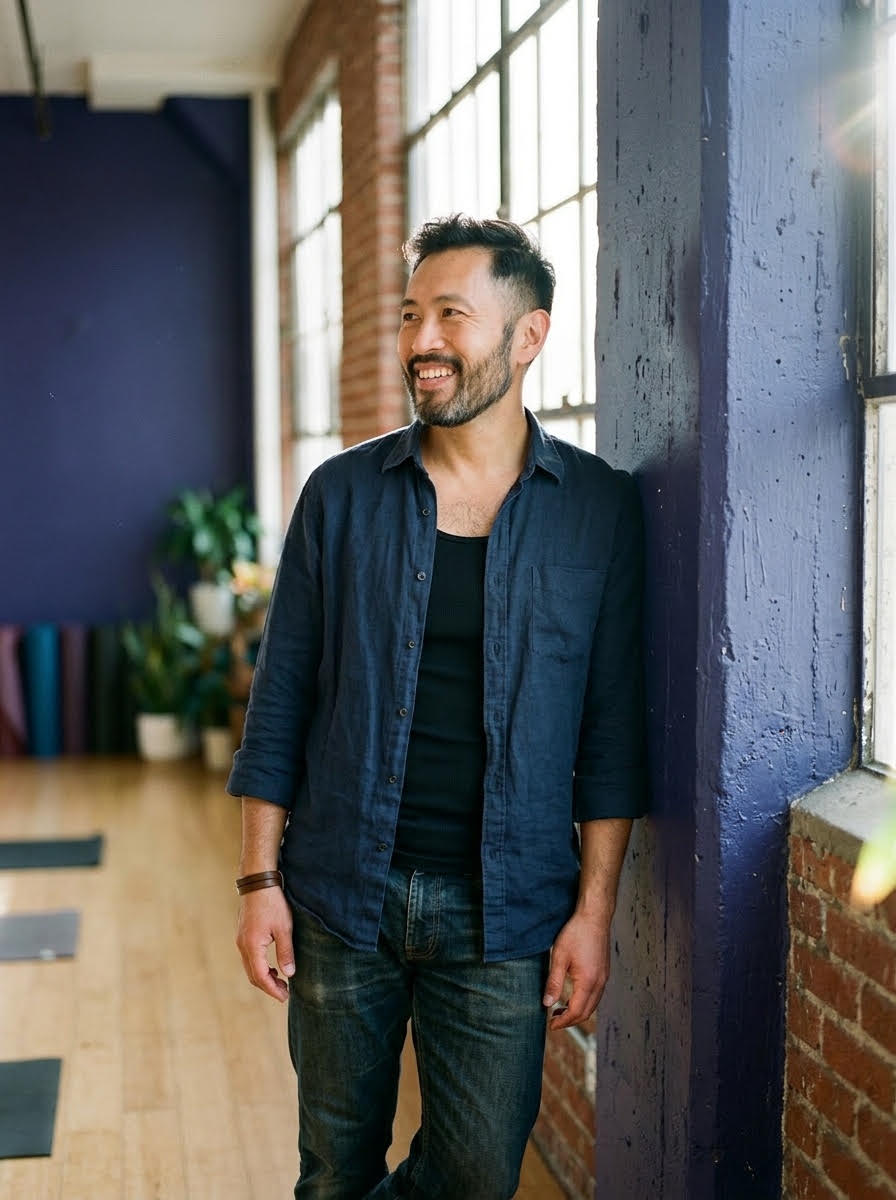
About David Tran
David (@yogongster) spent years as a strategy consultant before making a full pivot in 2020, into yoga, breathwork, and sound. What followed was five years of teaching mostly in East London and holding sound baths on MoreYoga WellnessTV. His sound baths were named among the best in London by Condé Nast Traveller. Before moving to Los Angeles in 2025, he trained a cohort of sound artists who are now holding their own space around London.
Today, David is building The Tamashi Collective, a business acceleration studio that helps founders grow without losing the soul of why they started. It turns out the same principles that make a great sound bath, presence, attunement, knowing when to lead and when to listen, make for better businesses too.