
It’s probably not such a controversial thing to say these days that the modern lives we lead don’t always bring us towards a state of balance.
We could probably go a little further, if we are being honest, and say that many aspects of our lives that have been absorbed as ‘normal’ ways of living contribute towards us feeling increasingly stressed and strained.
I say this as I see it so much in my own life, and in the lives of students who generously share the challenges that they too face in their own daily conundrums.
What we’ve been conditioned to value
We have been conditioned, in modern times, to place significant value on ideas or concepts such as achievement, progress, productivity and the sense that to lead a fulfilled life we must always be ‘doing’ something or other.
Whilst there is nothing inherently wrong with any of these, as with everything, the extent to which we subscribe or attach to these ideas determines the effect they have on our lives. For many of us we have become bound into living our lives at pace, packing huge amounts of ‘doing’ into our days and always feeling like we need something more or better in our lives. The result is often living with chronic stress, sleep challenges, emotional reactivity and ultimately not being able to find peace.
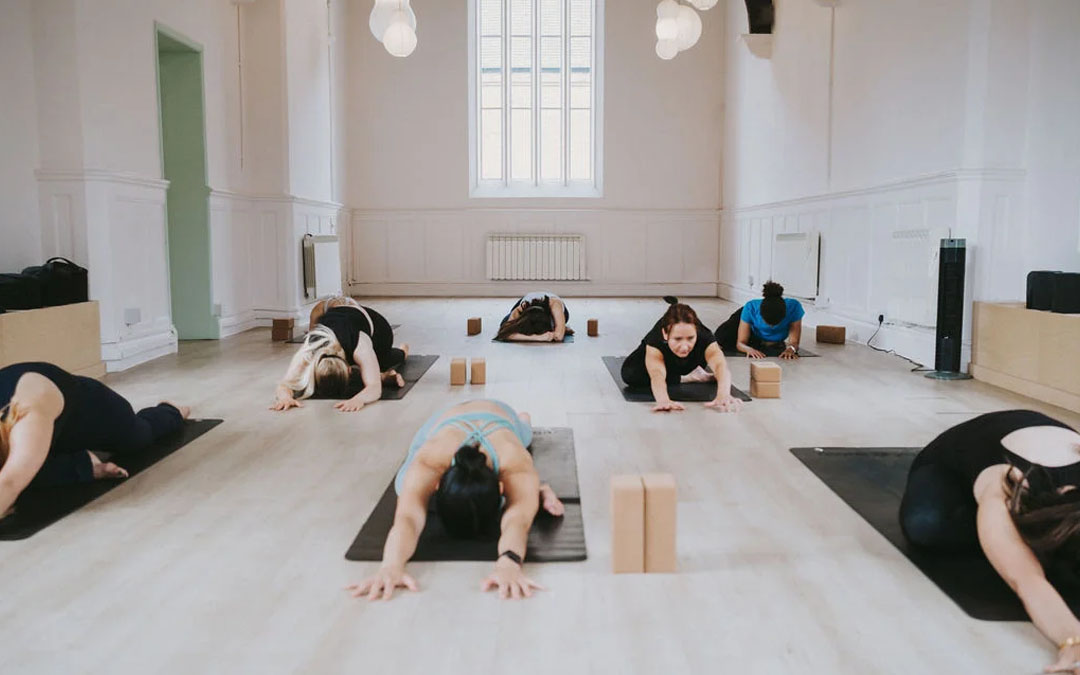
These of course are some of the reasons why we find ourselves practising yoga. Even if we arrive at yoga in search of more physical flexibility, strength and stability, we often find that we leave a session feeling more grounded, more balanced and with a stiller, less reactive mind.
The extent to which we attach to these ideas determines the effect they have on our lives.
A gentle note of caution
Although we may enjoy our practice and observe in ourselves a greater sense of peace after we have practised, we must tread with caution.
We may find in our practice that we bring the same striving, achieving, goal oriented mentality on to the mat, which in some ways continues to strengthen the very patterns that might be a major contributor to our stress off the mat.
Perhaps this manifests as pushing ourselves a little too hard, forcing ourselves into postures we are not ready for, staying for longer than appropriate in a particular asana, or harshly judging ourselves when we don’t live up to our expectations of how we should feel or ‘perform’ in our practice.

We may bring the same striving, goal oriented mentality on to the mat, strengthening the very patterns that contribute to our stress off the mat.
The texts are the map
This is why, in order to practise yoga in a way that gradually starts to cultivate more balance and peace, in a consistent and sustainable manner, we undoubtedly need the support of the ancient yoga philosophy texts. These are essentially the tried and tested maps that provide profound guidance for the way in which we should practise and how we integrate these practices into our lives. Without them we don’t necessarily even know the destination we are trying to reach.
It is worth noting that in The Yoga Sutras of Patanjali, regarded to be the most important and foundational text in classical yoga, in the 195 sutras or verses of the text, only three of them are related to asana or posture. The rest of the sutras talk about the goal of yoga, the various methods for achieving a state of yoga (permanent stillness and peace) and the importance of practising not just on the mat but in all the domains of our lives.

What use is it being peaceful on the mat when we immediately enter into conflict or arguments with friends or family at the slightest provocation or trigger?
Taking the teachings off the mat
For instance, santosha is the practice of contentment. We can practise trying to become content with our physical capacity on the mat in order to more intentionally create a pattern of being more accepting of ourselves in general. To leave that practice on the mat though would mean missing the opportunity to practise cultivating contentment when it comes to receiving difficult news, or when things don’t go ‘our way’.

Similarly, sutra 2.16 asks us to try to ‘avoid the suffering that is yet to come’. On the mat this might mean being more gentle and less forceful to reduce the possibility of injuries coming. In our daily lives this might mean noticing a behavioural pattern such as defensiveness or jealousy, appreciating how it can bring suffering in our relationships, and working to gradually soften these patterns and the harm they may cause.
All of this though requires tapas, which we can describe here as an appropriate and sustainable discipline that keeps us practising and being able to hold the psychological discomfort that can often arise from trying to make changes in our lives. Although in modern yoga circles using a word such as discipline can sometimes land uncomfortably, the truth is that to make any form of meaningful change requires a level of discipline and intentionality.
Again, a note of caution. Viniyoga, mentioned in the third chapter of The Yoga Sutras, is a reference to the need for all practitioners to practise something that is appropriate to their season of life. That is to say, sometimes we have more energy, sometimes less; at times we need to restore and at times we feel capable of growth. In this context, let’s frame this as being able to take responsibility for our practice in a way that gives us what we need in the moment, rather than forcing ourselves to do things that may not be appropriate at that time.

A rich seam of wisdom
Hopefully even just by reflecting on these short examples we can see that the underpinning philosophy of yoga offers a rich seam of wisdom that can help to transform the nature of our practice and, of course, our lives too.
“The success of Yoga does not lie in the ability to perform postures but in how it positively changes the way we live our life and our relationships.”
TKV Desikachar, son of Sri T Krishnamacharya
If you find this resonating and you have the feeling you’d like to explore this side of practice more, look out for teachers who include philosophical themes in their classes, or who have studied these ancient philosophies and are passionate about sharing them.
Daryn shares more on this in our social series.
About Daryn Wober
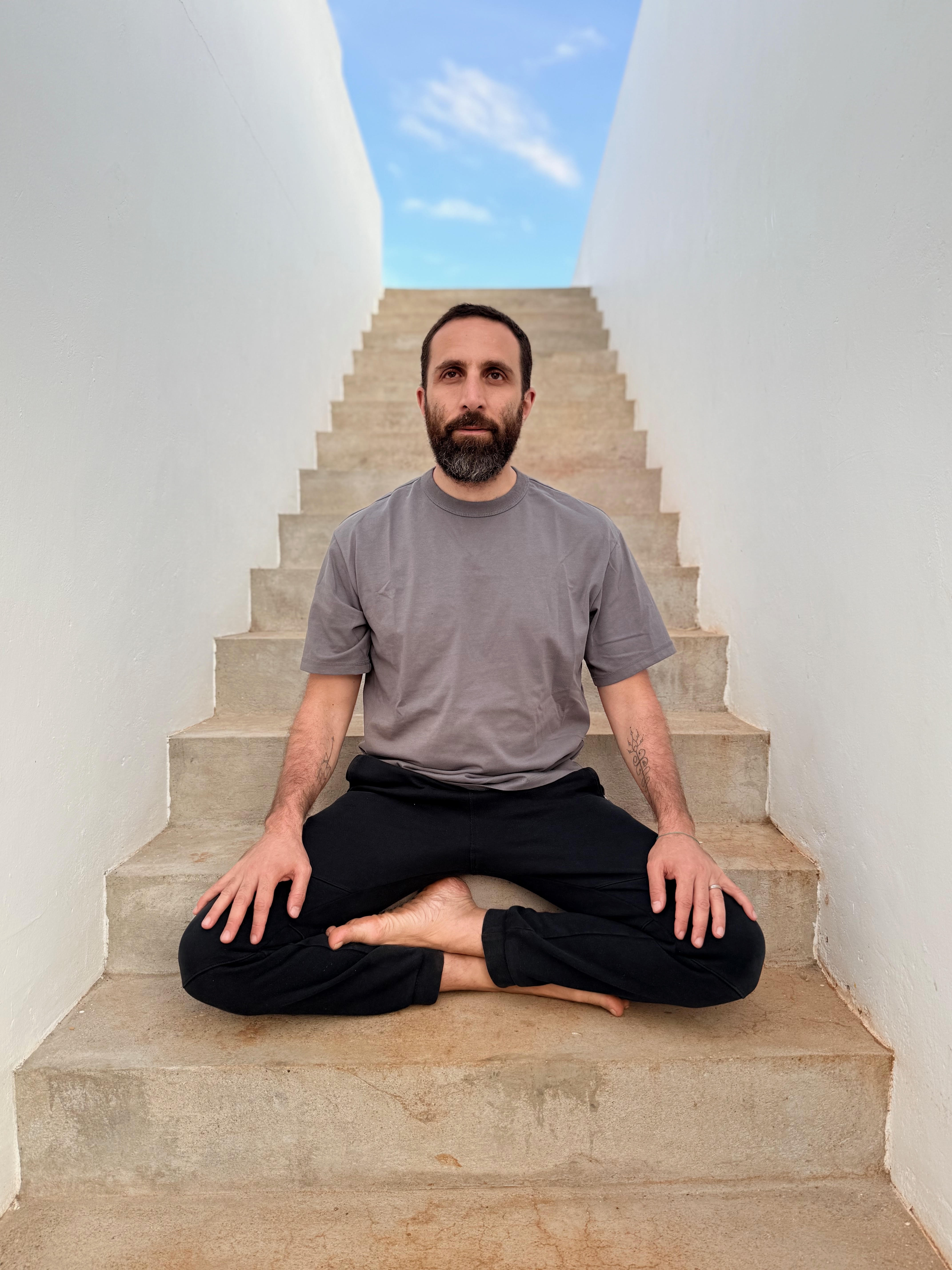
Daryn is a yoga teacher and yoga therapist who is passionate about supporting people to move from chronic overwhelm and burnout to embodied balance, calmer nervous systems, and meaningful inner connection through evidence based, lineage rooted practices.
After spending many years in the corporate world, he experienced first hand the stress, dissatisfaction and sense of disconnection that can arise from living solely in pursuit of external achievement. Yoga became a catalyst for profound personal transformation, inspiring him to leave his business career, train extensively in India, and dedicate his life to sharing these teachings with others.
Today, Daryn teaches yoga, breathwork, meditation, chanting and philosophy, helping people navigate life’s challenges with greater clarity, balance and self understanding. His approach combines practical tools with the wisdom of classical yoga, making ancient teachings accessible and relevant to modern life.
He teaches in person group classes as well as working one to one with individuals to support them on their journey.
You can find out more about his work in the following places:
Website: darynsyogashala.com
YouTube: @darynsyogashala
Instagram: @darynsyogashala